
Building a deck? One of the first big decisions is board size. Pick the wrong dimensions, and you could end up with a deck that’s weak, ugly, or just doesn’t feel right. It’s a surprisingly complex choice.
Consider deck size, aesthetics, joist spacing, and climate when selecting deck board dimensions:
- 5.5 inches (Standard Width): Versatile and ideal for most decks, offering a traditional look.
- 8 inches (Wide Boards): Best for larger decks, reducing seams for a modern appearance.
- 1 inch (25 mm) thickness: Standard for most decks.
- 1.5 inches (38 mm) thickness: Extra durability for heavy use or harsh climates.
Ensure the thickness supports the joist span to prevent warping. Always follow building codes and consult professionals for the best results.

Let’s dive into the specifics of deck board dimensions to help you make the perfect choice for your project. We’ll cover everything from standard sizes to the pros and cons of different widths, thicknesses, and lengths.
What Are Standard Deck Board Sizes and Why Do They Matter?
Confused by all the numbers? Deck boards come in standard sizes for a reason. These standards ensure everything fits together correctly, and parts are easy to find. But it’s about more than just convenience.
Standard deck board sizes, like 1×6 (19mm x 140mm), 5/4×6 (25mm x 140mm), and 2×6 (38mm x 140mm), ensure compatibility with fasteners, joist spacing, and building codes, simplifying construction and ensuring structural integrity.

Dive Deeper: Why Standard Sizes Are Crucial
It’s not just about making life easy for builders. Standard sizes have a real impact on your deck project:
- Aesthetics: Standard sizes create a consistent, predictable look.
- Durability: Standard thicknesses are chosen to provide adequate strength for typical deck use.
- Deck Layout: Joist spacing is designed around standard board sizes. Using non-standard sizes can complicate the framing process.
- Installation: Fasteners and other hardware are designed for standard board dimensions.
- Maintenance: Consistent sizing makes it easier to replace damaged boards.
- Building Codes: Codes often specify minimum dimensions to ensure safety and structural integrity.
Deck board dimension chart
| Nominal Size (inches) | Actual Size (inches) | Actual Size (mm) | Common Use |
|---|---|---|---|
| 1×4 | ¾" x 3 ½" | 19mm x 89mm | Railings, trim, light-duty decking |
| 1×6 | ¾" x 5 ½" | 19mm x 140mm | Residential decking, lighter use |
| 5/4×6 | 1" x 5 ½" | 25mm x 140mm | Residential/light commercial, heavier use |
| 2×4 | 1 ½" x 3 ½" | 38mm x 89mm | Railings, framing, heavier-duty decking |
| 2×6 | 1 ½" x 5 ½" | 38mm x 140mm | Commercial, high-traffic, heavy loads |
| 2×8 | 1 ½" x 7 ¼" | 38mm x 184mm | Framing, joists |
| 2×10 | 1 ½" x 9 ¼" | 38mm x 235mm | Framing, joists |
| 2×12 | 1 ½" x 11 ¼" | 38mm x 286mm | Framing, joists |
Note: "Nominal" size refers to the rough-sawn dimension before finishing. "Actual" size is the finished dimension.
How Wide Should Your Deck Boards Be?
Struggling to choose between wide and narrow boards? It’s not just about looks. Wider boards can make a small deck feel bigger, but they also have drawbacks.
The general width of deck boards ranges from 3 ½" (89mm) to 5 ½" (140mm). Wider boards offer a modern look and fewer gaps, while narrower boards suit intricate designs but require more fasteners.

Dive Deeper: Weighing the Pros and Cons of Width
Let’s analyze the advantages and disadvantages of different deck board widths:
| Feature | Wide Boards (e.g., 5 ½" / 140mm) | Narrow Boards (e.g., 3 ½" / 89mm) |
|---|---|---|
| Aesthetics | Modern, spacious feel; fewer seams | Traditional look; better for intricate patterns |
| Functionality | Fewer boards to install; potentially faster installation | More boards to install; potentially more time-consuming |
| Drainage | Fewer gaps for water to drain through; may require more slope | More gaps for water to drain through; may require less slope |
| Expansion/Contraction | More prone to movement with temperature and humidity changes | Less prone to movement |
| Cost | Generally more expensive per square foot/meter | Generally less expensive per square foot/meter |
| Gaps | Fewer gaps between boards | More gaps between boards |
| Warping | More susceptible to warping | Less susceptible to warping |
| Recommendation | Best for larger decks, modern designs, or where a clean, seamless look is desired. | Best for smaller decks, traditional designs, or where intricate patterns are desired. |
How Thick Should Your Deck Boards Be?
Worried about your deck supporting that hot tub? Thickness is key. Thinner boards are fine for light use, but a thicker board is essential for safety.
The general thickness of deck boards is 1" (25mm) actual, often sold as 5/4. Thicker options, like 2x (38mm actual), provide greater load-bearing capacity and stability.

Dive Deeper: Thickness and Its Impact
Let’s compare general thickness with thicker sizes:
| Feature | General Thickness (1" / 25mm actual) | Thicker Sizes (1 ½" / 38mm actual) |
|---|---|---|
| Load-Bearing | Suitable for standard residential use | Higher capacity; suitable for heavy loads, hot tubs, large gatherings |
| Usage | Typical decks, walkways | High-traffic areas, commercial decks, areas requiring extra support |
| Stability | Good stability | Excellent stability; less prone to flexing or bouncing |
| Joist Spacing | Typically 16" (406mm) on center | Can often span longer distances, potentially allowing for wider joist spacing |
| Foot Feel | Feels solid underfoot | Feels very solid and substantial |
| Recommendation | Good for general residential, if you need a balance cost and durability. | Recommended for heavy-duty, safety, and a more premium, robust feel are priorities. |
How Long Should Your Deck Boards Be?
Thinking about long, seamless deck boards? It looks great, but there are practical limits. Long boards can be difficult to transport and more prone to warping.
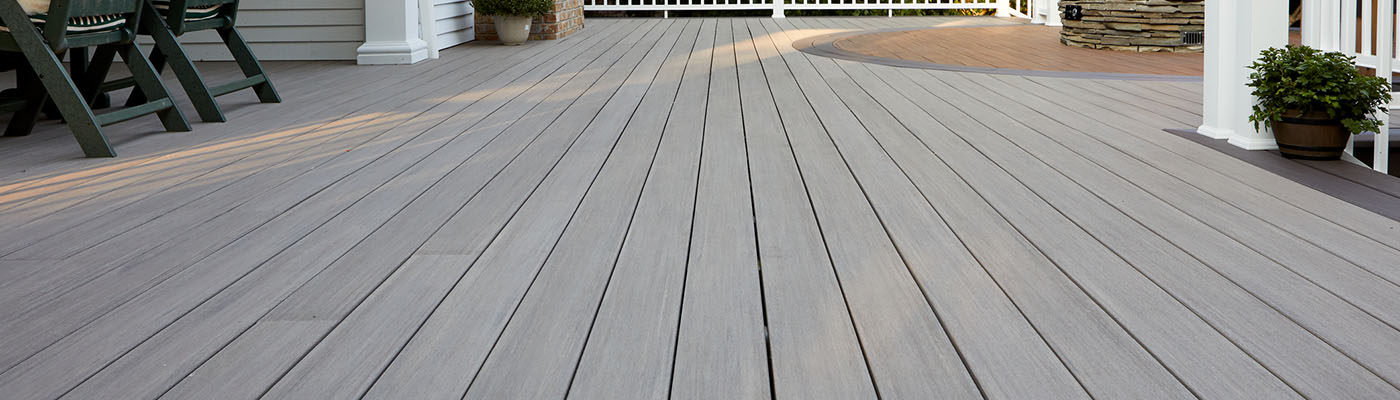
Deck boards commonly range from 8′ (2.44m) to 20′ (6.1m). Longer boards minimize seams but can be harder to handle. Production, transportation, and installation constraints often limit practical length.
Dive Deeper: The Long and Short of Deck Board Length
Let’s analyze the length issue from different perspectives:
- Overall Design: Longer boards create a cleaner, more continuous look with fewer butt joints.
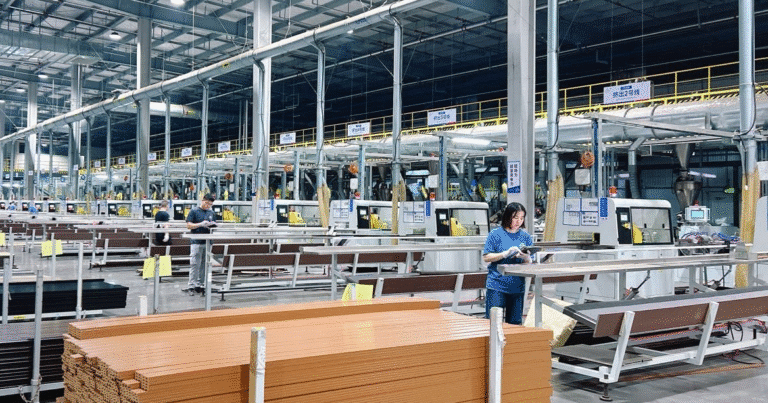
- Production: Manufacturers typically produce boards in standard lengths, with longer lengths sometimes requiring special orders.
- Transportation: Lengths over 16′ (4.88m) can be difficult to transport without specialized equipment. Boards over 4 meters may warp during transport. Recommended max length: 3 meters for easier handling and processing
- Installation: Longer boards can be heavier and more cumbersome to maneuver, potentially requiring more manpower.
- Applicable Scenarios:
- Residential: 8′ (2.44m) to 16′ (4.88m) lengths are common and generally manageable.
- Commercial: Longer lengths may be used to minimize seams in high-traffic areas, but transportation and installation logistics must be carefully considered.
Recommendation: Choose the longest lengths that are practical for your project, considering transportation, handling, and the desired aesthetic.
How Do Composite vs. Lumber Deck Sizes Differ?
Thinking about composite decking? The dimensions aren’t always the same as lumber. Composite boards often have unique profiles and may come in different lengths.
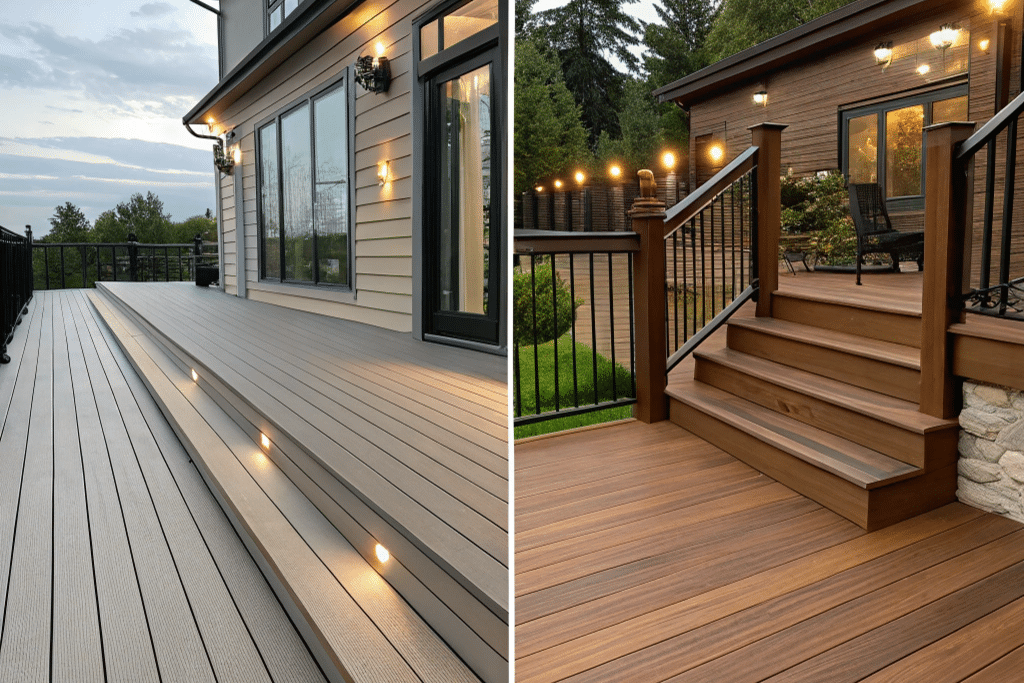
Composite deck boards often have similar widths to lumber (around 5 ½" / 140mm) but can vary in thickness and length. They may also have different edge profiles (grooved for hidden fasteners vs. square).
Dive Deeper: Understanding the Dimensional Differences
Here’s a breakdown of how composite and lumber decking compare:
- Width: Many composite boards mimic the width of standard lumber (5 ½" / 140mm). However, some manufacturers offer wider or narrower options.
- Thickness: Composite board thickness varies significantly depending on the brand, product line, and internal structure (solid vs. hollow). Some are thinner than standard lumber, while others are thicker.
- Length: Composite boards are often available in longer lengths than readily available lumber, reducing the number of seams.
- Edge Profile: Composite boards frequently have grooved edges for use with hidden fastening systems, while lumber typically has square edges.
Key Takeaway: Always check the manufacturer’s specifications for composite decking, as dimensions and installation requirements can differ from lumber.
Which Dimensions Work Best for Your Deck?
Still unsure which dimensions to choose? It all comes down to your specific deck. Size, style, how you’ll use it – these all matter.
Match deck board dimensions to your overall deck size, design, intended use, environmental conditions, and budget. Consider factors like foot traffic, furniture, and desired aesthetic.

Dive Deeper: Tailoring Dimensions to Your Needs
Here’s a guide to help you choose the right dimensions:
- Overall Deck Dimensions: Larger decks can often accommodate wider and longer boards, creating a more expansive feel. Smaller decks may benefit from narrower boards to avoid looking cramped.
- Style: Modern designs often favor wider boards, while traditional styles may use narrower boards.
- Durability: High-traffic areas or decks supporting heavy loads require thicker boards (e.g., 2×6 / 38mm x 140mm).
- Environment: Areas with significant temperature and humidity fluctuations may benefit from narrower boards to minimize expansion and contraction issues.
- Usage: Consider how you’ll use the deck. If you plan to have heavy furniture or a hot tub, choose thicker boards.
Example Scenarios:
- Small, low-traffic deck: 1×6 (19mm x 140mm) boards, 8′ (2.44m) to 12′ (3.66m) lengths.
- Medium-sized deck with moderate use: 5/4×6 (25mm x 140mm) boards, 12′ (3.66m) to 16′ (4.88m) lengths.
- Large deck with heavy use or hot tub: 2×6 (38mm x 140mm) boards, 16′ (4.88m) or longer (if feasible).
Conclusion
Choosing the right deck board dimensions isn’t a one-size-fits-all proposition. By carefully considering the factors outlined above – standard sizes, width, thickness, length, and material – you can create a deck that’s not only beautiful but also structurally sound, durable, and perfectly suited to your needs.

5 thoughts on “How to Choose the Right Deck Board Dimension?”
Considering getting into the affiliate side of things? Royalbetaffiliates seems like a decent option. I’ve heard some okay things. Might be worth a look if you’re trying to make some extra cash. More info here: royalbetaffiliates
Can you be more specific about the content of your article? After reading it, I still have some doubts. Hope you can help me. https://www.binance.com/register?ref=IHJUI7TF
Sikkimgameapk? Downloaded it last week. Pretty fun! Lots of options to keep you busy. Worth a try if you’re bored. See what all the hype is about. sikkimgameapk
Thanks for sharing. I read many of your blog posts, cool, your blog is very good.
Can you be more specific about the content of your article? After reading it, I still have some doubts. Hope you can help me. https://accounts.binance.com/en-NG/register?ref=YY80CKRN
Comments are closed.