Wood vs. Composite Decking: Which is the Best Choice?

When choosing the ideal decking material, wood and composite are the most popular floor decking options. Whether you are purchasing for yourself or hiring a contractor, understanding the unique differences between these two materials is essential to avoid potential pitfalls. Composite decking is known for being extremely durable, requiring minimal maintenance, and having the longest lifespan, while wood decking features natural grain patterns.
So, how do you choose?
 
This comprehensive guide will lead you through a detailed comparison, examining material types, cost factors, maintenance needs, and environmental impact, to help you determine which decking option best suits your requirements.

1. Wood Decking

In most cases, users choose wood decking for its ease of installation, natural grain, traditional look, and lower short-term costs. Wood decking can be easily cut, stained, or painted, making it ideal for DIY design preferences. Regular maintenance is needed to maintain its appearance and durability.
 
Because wood decking is susceptible to moisture, UV exposure, and rot fungi, it can quickly show signs of aging, mold, rot, warping, cracking, and nail exposure. Therefore, regular maintenance (such as cleaning, sealing, and occasional repairs) is crucial for extending its lifespan. If you are not aware of these requirements, you might find that wood is not worth your time. When you buy a deck, you take on some responsibilities, including frequent cleaning and refinishing—this is more than just a verbal commitment and can become quite inconvenient.
 
Therefore, for those who prioritize natural aesthetics and low initial costs for outdoor spaces, timber decking remains a popular choice. If you appreciate the benefits of wood decking, be sure to invest in high-quality, durable hardwood (or heat-treated softwood) and keep up with regular maintenance.
Treated pine decking

2. What is Composite Decking?

WPC (wood plastic composite) decking is a new type of outdoor decking material that combines the advantages of wood and plastic, overcoming the drawbacks of traditional wood decking such as susceptibility to rot, cracking, warping, insect damage, and mildew, while also offering a longer lifespan and lower maintenance costs.
As more builders, contractors, and homeowners become aware of the shortcomings of wood decking, they are increasingly turning to high-performance composite decking. Learn more about composite decking products.
Note:
Composite decking boards are composed of: primarily wood fibers (such as wood flour and wood chips) and thermoplastic resins (such as polyethylene and polypropylene). These materials are mixed and compressed under high heat and pressure to form a composite material that combines the natural appearance of wood with the performance advantages of plastic.
WPC decking
WPC decking

3. How to Choose Between Wood and Composite Decking: Pros and Cons?

Many homeowners choose wood decking because it is inexpensive, familiar, and easy to obtain, making it convenient for DIY projects. Some may also be concerned that composite decking lacks the natural feel of wood.
 
However, builders, contractors, and wholesalers often opt for composite decking. The reason is that composite decking features highly realistic wood grain, a lifespan of 10-20 years, and requires almost no maintenance, offering a high-quality feel. High-performance composite decking does not suffer from warping, mold, aging, or wear issues. Additionally, installation is simple and modular, allowing one person to complete the task.
 
It is suitable for large-scale outdoor landscape projects, such as beaches, parks, plazas, patios, swimming pools, gardens, and construction sites. It can withstand harsh weather conditions.
Ecoxplank's WPC outdoor deck
If you are struggling with which material to choose for your project, it is not a single dimension and there are key questions to consider:

A. Which Looks Better?

Comparison Result: The simulated wood grain of the composite deck is now completely close to the solid wood grain, and looks more high-grade than the real wood.
 
  • Wooden deck: The surface texture looks natural, such as stuttering texture, has an original, traditional natural style, natural rustic charm.
  • Composite deck: Highly simulated wood grain, hardly visible as plastic, with variegated appearance and random 3D embossed wood texture. The visual effect of the outdoor space is very modern and stylish. Can have a very rich color, texture, surface pattern can be selected, custom.
Treated pine decking
Best black composite deck boards

B. Which Is Better at Resisting Moisture?

Impact of high moisture conditions on the serviceability performance of wood plastic composite decks
Comparison results: composite deck completely rolled wood deck.
 
  • Wood deck: Natural wood is porous and absorbs moisture easily. This water-absorbing property corrodes the deck in advance. If exposed to a humid environment for a long time, it is easy to expand, deform, crack, and even breed mold, and the service life is very short.
  • Composite deck: insoluble in water from the inside out. Ecoxplank’s composite deck has passed the boiling water test at 100 degrees and 124 hours, and has excellent water resistance and moisture resistance. It does not absorb water, so it is not easy to rot, mildew and other problems, especially suitable for use in humid environments, such as bathrooms, around swimming pools and so on.
Excellent water resistance of the WPC deck

C. Which Is More Durable and Has a Longer Lifespan?

Comparison results: The average service life of composite decks can reach 20 years or more, and almost no maintenance is required;
The average service life of the wooden deck is about 4 years, and if it is regularly maintained and repainted twice a year, the average service life is about 9 years.
Of course, there are also the best decks, and here is a top comparison of high-end wood vs. composite decks:
Top competition of high-end wood vs composite deck

D. Which One Has Lower Maintenance?

Comparison results: The composite deck requires almost no maintenance;
 
The wood deck is deeply cleaned twice a year, and the ordinary wood deck needs a thorough sanding, sealing, dyeing or painting every 2 years, and the frequency and investment of daily maintenance is significantly higher.
Wood VS WPC decking Low maintenance durability comparison chart

E. Which One Is Resistant to Insect Damage?

Comparison results: The composite is more resistant to insect damage than the wooden deck, because it is made of a mixture of wood fiber and plastic, the material itself does not have the components to attract insects, so it is not subject to insect attack;
 
Wood decks tend to attract pests such as termites, especially if left untreated, and are more susceptible to insect damage, so they usually need to be painted or sealed.
WPC decking's high density inner core and coextruded protective layer

F. Which One Can Prevent Debris?

Comparison results: The composite material almost does not produce debris, because it is made of wood fiber and plastic mixture pressed, the particle size is very small, the density is high, the structure is more compact and not easy to crack;
 
Wood deck wood is soft, especially high heels and sharp objects rub, there will be burrs, long time will crack deformation, decay, easy to produce wood chips. Wooden decks are not recommended if there are children or in barefoot places such as swimming pools.

G. What Is the Cost Difference between Wood and Composite Decks?

Comparison results: The short term value of wooden deck is better than that of composite deck; Long-term value, including service life, maintenance cost perspective, composite deck is the best choice.
The initial cost of composite is much higher than that of wood deck due to the complexity of the production process and the extreme durability of the material. But in the long term, the composite is less expensive to maintain and does not require regular sanding, sealing or painting, which to some extent makes up for the initial investment.
 
While the initial cost of wooden decks is lower, it is an affordable option, but due to the need for frequent maintenance, such as cleaning, sanding, painting, etc., the total cost of long-term use may gradually increase. Therefore, composite materials are more suitable for long-term investments, while wood decks are more suitable for users with limited budgets who are looking for short-term cost savings.

H. Which One Is Most Suitable for Installation and Machining?

Comparison result: Wooden deck is more suitable for installation and processing, especially for DIY users.
Wood can be easily cut, nailed, and drilled, and can be dyed or painted, providing greater customization and flexibility. Wooden decks are ideal for projects that require frequent adjustments and personalized design.
 
Although composite materials are more beautiful and durable after installation, cutting and processing are relatively difficult due to the density and structure of the material, requiring the use of specific cutting tools. Therefore, if you want to DIY, or simple processing, wood deck is a more ideal choice.

I. Which Surface Is Cooler?

The surface temperature of wood decks is usually lower than that of composite materials, especially in direct sunlight.
Due to the plastic component, the composite material has higher heat absorption and low SRI value. Therefore, in hot weather, it will heat up more easily than wood, and the surface temperature is higher. This makes the wooden deck more suitable for walking and touching in a strong sunlight environment, not easy to burn feet or hands, but pay special attention to nails and burrs.
Wood vs coposite appearance, maintenance, durability, etc

J. Which one is the most comfortable and safe?

Wood decks do not produce volatile organic compounds (VOCs) and are more health friendly. However, wooden decks are prone to cracking and debris over time, which can pose a risk of puncture wounds, so regular maintenance is needed to stay safe.
In contrast, composite materials have more advantages in non-slip and durability, and are not easy to crack or produce debris, reducing the likelihood of puncture wounds. In addition, it also has good anti-mildew and anti-insect properties, suitable for use in humid environments. If the priority is foot comfort and safety, a composite deck is the better choice.
WPC outdoor decking a clean and tidy surface

4. What is the price of wood vs. composite deck?

No material is very cheap.
Wooden deck cost:
  • Installation cost: Installation costs are around $15 to $35 per square foot.
  • Deck material cost: In the case of preservative wood, the material cost is approximately $1,275 to $2,890.
  • Maintenance costs: The cost of maintaining preservative wood is approximately $455 per year.
Due to the high maintenance costs of wooden decks, for example, $451 per year of maintenance costs can accumulate to $6,765 over 15 years, and this cost can increase further depending on the extent of damage to the deck. In addition, maintaining a wooden deck requires a lot of manual labor, which is a very bad experience.
The initial cost of composite decking is often higher than most lumber, often causing you to hesitate. Through some studies, it can be found that the composite material requires little maintenance in the later period, so it hardly costs money in long-term use.
In order to give you a better understanding of the long-term costs, we have listed the detailed description of the composite deck for your reference:
  • Installation cost: $30 to $50 per square foot.
  • Deck material cost: A 35 ‘x 22’ deck, for example, would cost between $3,580 and $4,934.
  • Maintenance costs: For an Ecoxplank composite deck, maintenance costs are virtually zero or negligible.
Wood vs WPC deck cost comparison

5. Wood vs Composite Deck Who Is the Best Choice?

The initial budget is limited or the pursuit of logs, simple, authentic traditional style, or small scenes such as the courtyard backyard, more suitable for wooden decks.
If you are looking for some ultra-low maintenance, ultra-long lasting, child safe and corrosion resistant high-quality, large-scale outdoor project materials, composite deck is the right choice for you.
If you choose a high-quality solution, Ecoxplank’s composite deck can have an incredibly long life, be durable, scratch resistant and pleasing to the eye.

6. Start Your Composite Deck Project Now

Whether you are a construction unit, an engineering unit, a wholesaler, a decking contractor, or a property owner, Ecoxplank provides you with a wide range of resources to advance your project.
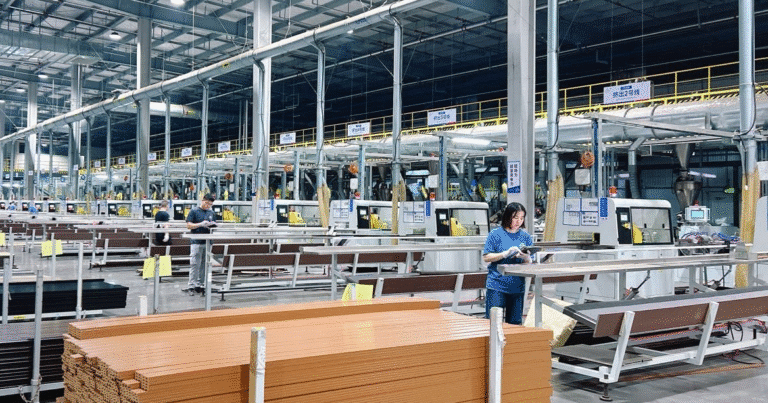
As a leading manufacturer and exporter of WPC (Wood Plastic Composite) decks in China, we have a wide range of composite deck types and solutions for you to choose from. You can also customize according to your project. If you are looking for a composite deck solution, definitely check it out.
Please contact us to learn more about our composite deck products and customized solutions.
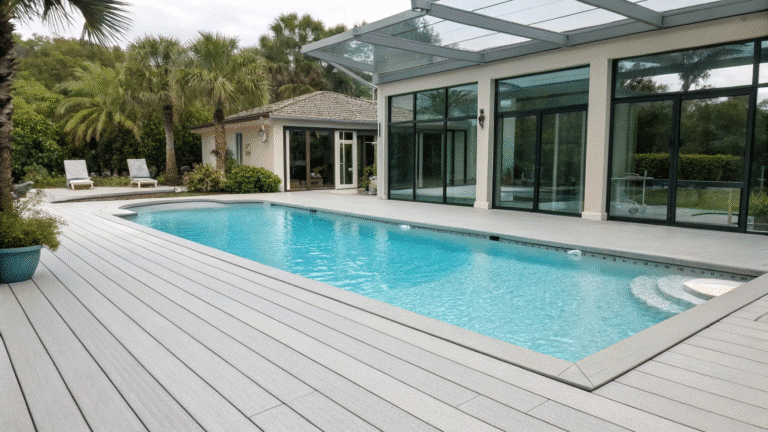
Ecoxplank's grey composite decking
Ecoxplank's 3D embossed deck

FAQ:

Should I Replace My Wooden Deck with Composite?
Don’t replace them randomly. Each option would be costly.
If you are tired of wood deck safety and decay, deformation, high maintenance issues, then you can choose to replace, can save time and money in the long run.
Wood vs Composite Decking

Get A Free Quote

Get in Touch

Related Blog

Are WPC Wall Panels 100% Waterproof?
blogs

Are WPC Wall Panels 100% Waterproof?

High-quality WPC wall panels have water absorption rates below 1.5%, approaching complete waterproofing, ideal for bathrooms and kitchens. Discover waterproofing principles, test results, PVC comparisons, and 2025's latest technology to choose the perfect waterproof decorative material.
Continue reading