WPC vs. PVC Fluted Panels: Which One is More Suitable for Your Project?
If you’re in the process of selecting construction and decorative materials, then you must understand the differences between WPC (Wood Plastic Composite) and PVC (Polyvinyl Chloride) fluted panels. These two materials vary greatly in terms of characteristics, application scenarios, and performance value.
When chosen correctly, it can save you costs and enhance your project; when chosen incorrectly, it can result in significant losses and even damage your project in the long run.
This article will compare these two materials from three core aspects to help you choose the most suitable material based on your project needs.
What is a WPC Fluted Panel?
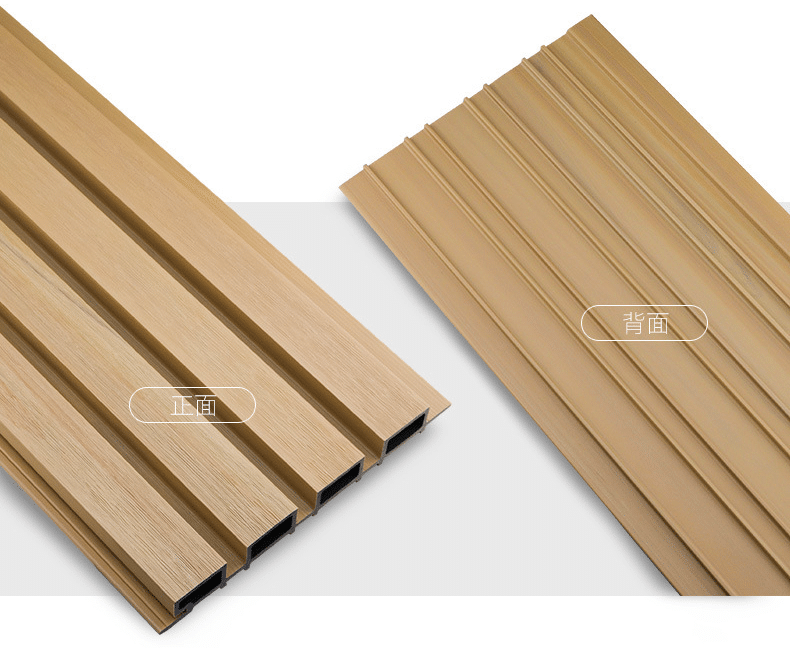
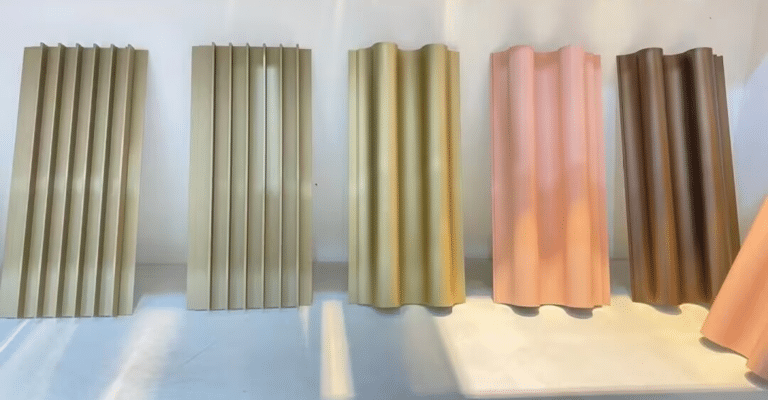
WPC (Wood Plastic Composite) fluted wall panels are an innovative construction material made by combining wood fibers and thermoplastic resins (such as PE or HDPE). They typically contain around 70% wood fibers and 30% plastic components.
This combination allows WPC fluted panels to retain the natural texture of wood while providing excellent water resistance, corrosion resistance, insect resistance, and durability. The low-maintenance characteristics of WPC fluted panels make them a perfect alternative to traditional wood fluted panels.
Main Features of WPC Fluted Panels
Natural Appearance
WPC fluted panels have a natural wood-like texture, appearing warm and authentic, making them ideal for projects that seek a natural aesthetic.Outstanding Weather Resistance
WPC fluted panels offer excellent water resistance, mold resistance, corrosion resistance, and UV resistance, preventing cracking, warping, or fading. They are highly suitable for outdoor use, ensuring long-term exposure to rain and sunlight without damage.Low Maintenance Costs
Unlike traditional wood, WPC fluted panels do not require periodic painting, oiling, or anti-corrosion treatment. They can be easily maintained with simple cleaning, significantly reducing time and costs associated with long-term upkeep.High Durability
WPC fluted panels have strong impact and insect resistance, with a typical lifespan exceeding 20 years. They are an excellent wood substitute, especially for outdoor projects requiring long-term durability.Eco-Friendliness
WPC fluted panels are often made from renewable resources, such as wood fibers and recycled plastics. Ecoxplank has conducted 244 air toxicity tests, ensuring full compliance with sustainable development standards, reducing reliance on forest resources, and making it more environmentally friendly.Easy Installation
Although WPC material is relatively lightweight, installation is simple, secure, and compatible with various DIY and professional installation needs, meeting the application requirements for different projects.Fire Resistance
WPC fluted panels manufactured by Ecoxplank offer excellent fire resistance, effectively suppressing fire spread and enhancing safety.Wide Applicability
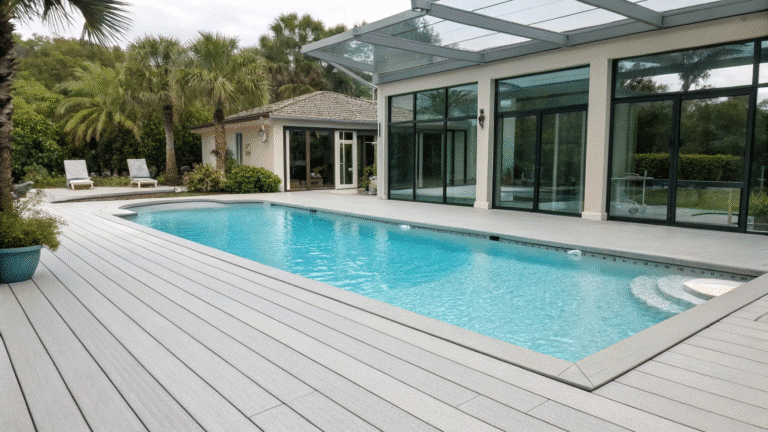
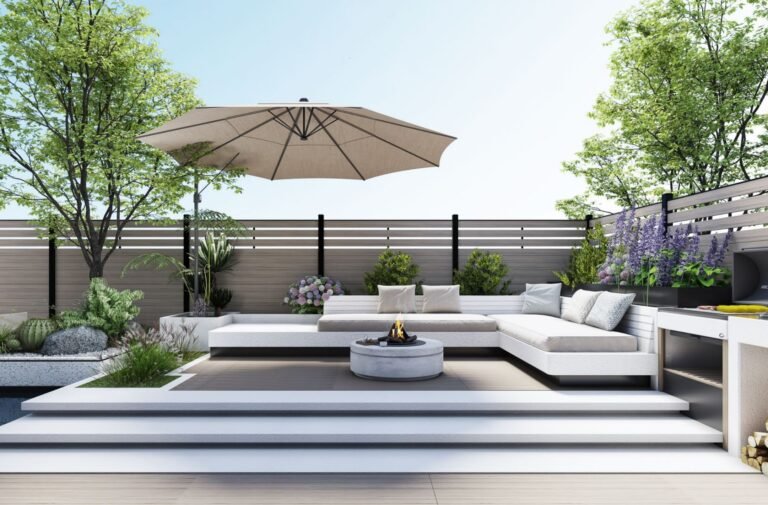
WPC fluted panels are suitable not only for outdoor gardens, balconies, and public facilities but also for indoor wall decoration. They offer a wide range of applications to meet diverse design needs.
What is a PVC Fluted Panel?
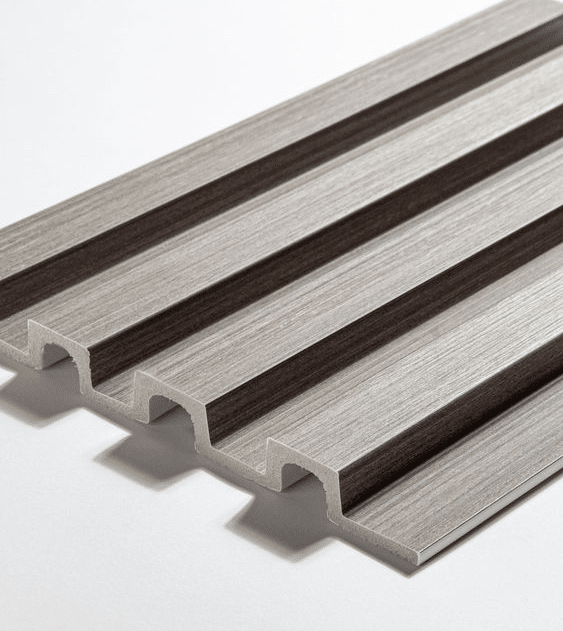
PVC fluted panels, also known as Polyvinyl Chloride (PVC) fluted panels, are building and decorative materials made entirely from plastic.
Due to the superior physical and chemical properties of PVC, these panels have a smooth surface, rich colors, good moldability, easy installation, and a lightweight and fashionable design. They are widely used in interior building and decoration applications.
This combination allows WPC fluted panels to retain the natural texture of wood while providing excellent water resistance, corrosion resistance, insect resistance, and durability. The low-maintenance characteristics of WPC fluted panels make them a perfect alternative to traditional wood fluted panels.
Features of PVC Fluted Wall Panels
Excellent Waterproof and Moisture Resistance
PVC fluted panels have strong waterproof and moisture-resistant properties, making them an ideal choice for high-humidity environments, such as bathrooms and kitchens, where moisture resistance is essential.Easy Installation and Lightweight
PVC is lightweight, easy to install, and suitable for DIY users. Compared to other materials, the installation process is faster and facilitates easy transportation and handling.Smooth Surface and Aesthetic Variety
PVC fluted panels have a smooth surface and high moldability, offering a variety of colors and styles, making them ideal for modern, minimalist, and commercial decoration needs.Low Maintenance Costs
PVC fluted panels are easy to clean and highly resistant to stains. They require only a damp cloth to stay clean, without special maintenance or treatment, keeping long-term use costs low.Cost-Effective
Compared to materials like WPC, PVC fluted panels have a lower initial cost, making them suitable for budget-conscious projects, especially those with short- to mid-term renovation needs.Good Corrosion Resistance
PVC inherently resists corrosion and is less susceptible to chemical erosion, making it widely applicable in certain industrial or commercial environments.Broad Application Range
PVC fluted panels are suitable for kitchens, bathrooms, offices, and commercial spaces, particularly in areas with high demands for moisture and waterproofing.
The drawbacks of PVC fluted panels are also evident:
Poor UV Resistance
PVC materials have weaker UV resistance, and prolonged exposure to sunlight may lead to fading, discoloration, or warping. Therefore, they are more suitable for indoor use or areas with limited sunlight exposure.Lower Environmental Friendliness
PVC materials are less biodegradable, making it difficult to decompose after disposal, which has a relatively larger environmental impact. Thus, PVC falls short in terms of eco-friendliness.
Key Differences Between WPC and PVC Fluted Panels
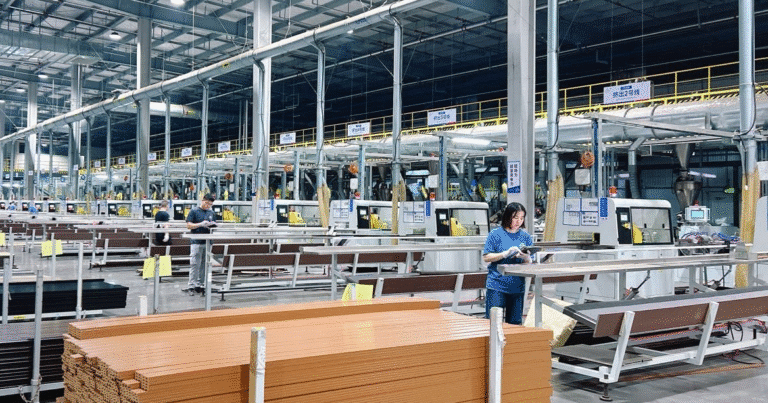
Ecoxplank, with 20 years of project experience, has conducted a detailed and professional comparison of WPC (Wood Plastic Composite) and PVC (Polyvinyl Chloride) fluted panels to help you comprehensively understand how to make the right choice.
| Comparison Dimension | WPC (Wood Plastic Composite) Fluted Panel | PVC (Polyvinyl Chloride) Fluted Panel |
|---|---|---|
| Material Composition | – Wood fiber/wood powder: approx. 50% – 70% – Plastic components (PE/PP): approx. 30% – 50% | – Polyvinyl Chloride (PVC): approx. 90% – 95% |
| Additives | Approx. 5% – 10%, including UV stabilizers, antioxidants, colorants, and coupling agents | Approx. 5%, including UV stabilizers, anti-aging agents, and colorants |
| Weather Resistance | Excellent; UV-resistant, waterproof, and moisture-resistant; suitable for long-term outdoor exposure to sunlight and rain | Fair; good waterproofing and moisture resistance but prone to fading and aging under prolonged sunlight; best for indoor or shaded outdoor environments |
| Natural Look | Mimics wood texture with a natural feel; suitable for traditional and natural styles | Smooth surface with a strong plastic look; suitable for modern, minimalist styles |
| Tactile Feel | Warm surface, feels like natural wood | Smooth and distinctly plastic feel |
| Thickness and Types | Thick and dense; offers more variety in types; dimensions can be customized based on project needs | Generally thinner with more uniform specifications; lightweight, and available in various types, with customizable dimensions |
| Eco-Friendliness | Made from recycled wood and plastic; environmentally sustainable | Non-biodegradable, with a greater environmental impact |
| Installation Difficulty | Heavier and more complex to install; typically requires professional installation | Lightweight and easier to install; suitable for DIY users |
| Durability | Lifespan exceeds 20 years, with resistance to corrosion and insects; ideal for long-term projects | Shorter lifespan, prone to aging and brittleness when exposed to outdoor conditions |
| Maintenance Cost | Low; minimal maintenance needed; simple cleaning suffices | Higher; more susceptible to dirt and requires periodic cleaning and upkeep |
| Initial Cost | Higher, but offers better long-term value; suitable for long-term use | Lower; budget-friendly for short-term projects |
| Ideal Applications | Outdoor: Garden fences, balconies, public facilities Indoor: Wood wall cladding | Indoor: Kitchens, bathrooms, office wall cladding |
Below we compare WPC and PVC fluted panels by their physical characteristics
Tensile Property:
Elastic Properties (DMTA)
How to Choose the Right WPC & PVC Fluted Panels for Your Project?
Additionally, Ecoxplank has conducted a detailed comparison of WPC (Wood Plastic Composite) and PVC (Polyvinyl Chloride) fluted panels based on application scenarios.
You can directly match these options to your project by referring to the table below.
| Comparison Dimension | WPC (Wood Plastic Composite) Fluted Panel | PVC (Polyvinyl Chloride) Fluted Panel |
|---|---|---|
| Application Scenario | Suitable for both outdoor and indoor use, especially outdoor projects like garden fences and balconies | Mainly for indoor use, such as kitchens, bathrooms, and office wall cladding; occasionally suitable for shaded outdoor areas |
| Outdoor Suitability | Excellent, with strong weather resistance, corrosion resistance, waterproofing, UV resistance, and no fading; suitable for extreme weather conditions with sun and rain exposure | Relatively weak; long-term exposure to sunlight may cause fading, aging, and warping, suitable only for outdoor areas with less sunlight |
| Indoor Suitability | Good, suitable for interiors that require a wood texture feel | Excellent, waterproof and moisture-resistant, suitable for humid environments like kitchens, bathrooms, and offices |
| Aesthetic Appeal | Natural wood-like texture, close to wood, ideal for natural and classic design styles | Smooth surface with a variety of colors, suitable for modern, minimalist styles |
| Durability | Long lifespan, usually over 20 years, suitable for long-term projects | Relatively short lifespan, requires careful maintenance for long-term use, suitable for short- to mid-term projects |
| Maintenance Cost | Low, minimal maintenance needed, only regular cleaning required; low long-term costs | Higher, prone to aging and fading, requires regular inspection and maintenance |
| Initial Cost | Higher, but offers better value for long-term use | Lower, suitable for budget-limited projects |
| Long-Term Value | Very high; initial investment is higher, but durability and low maintenance offer good value | Medium; low initial cost, but maintenance and replacement costs increase long-term expenses |
| Eco-Friendliness | Excellent; made from recycled wood and plastic, aligns with eco-friendly concepts | Low; non-biodegradable, greater environmental impact |
| Installation Difficulty | Heavier, more difficult to install, generally requires professional installation | Lightweight, easy to install, suitable for DIY projects |
| Ideal Design Style | Natural style, wood texture-rich aesthetic, such as gardens, balconies, terraces, and courtyards | Modern, minimalist aesthetic, such as offices, kitchens, and bathrooms |

Overall Recommendations:
WPC Fluted Panels: If your project requires a natural look and weather resistance for outdoor use, or if it needs high eco-friendliness, low maintenance, and long-term durability (such as garden fences or public facilities), WPC fluted panels are the best choice.
PVC Fluted Panels: If your project is budget-limited, primarily for indoor use, and requires moisture resistance (such as for kitchen and bathroom wall cladding), PVC fluted panels offer better value for money.
Source:MDPI